

Blog
Dead Sea Salts: Mineral Composition and Therapeutic Benefits

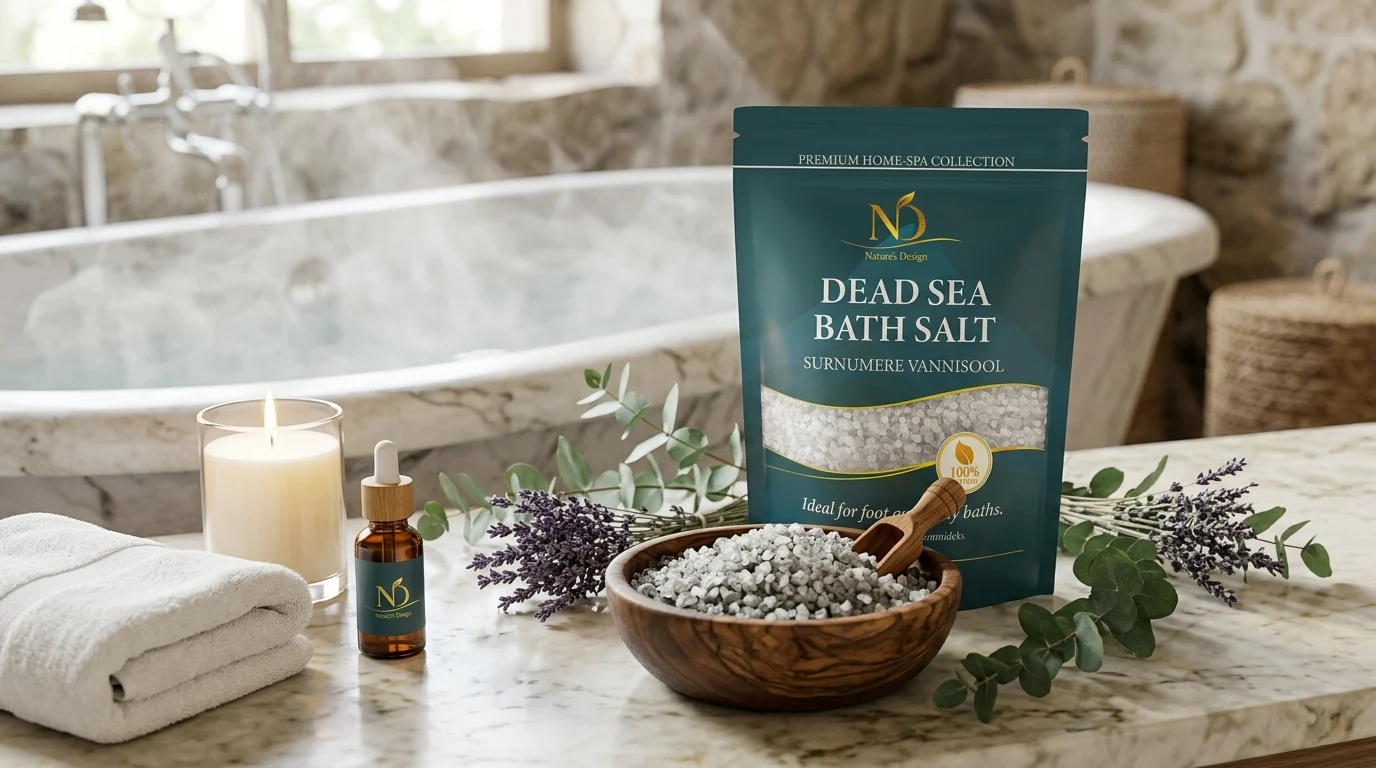
Have you ever wondered why Dead Sea water and its salts are hailed as one of nature’s most potent remedies? Far from being a marketing myth, the Dead Sea’s reputation is grounded in biochemical reality. Its water contains mineral concentrations found nowhere else on Earth—concentrations that play a vital role in skin health and systemic well-being. Unlike standard sea salt, Dead Sea minerals penetrate deep into the skin to soothe chronic inflammation and stimulate the body’s natural regenerative processes.
The Unique Chemical Profile of Dead Sea Water
While the Dead Sea is famous for its extreme salinity, its true therapeutic value lies in its specific mineral ratios. Typical ocean water is dominated by sodium chloride (common table salt), but the Dead Sea’s composition is far more complex and biologically active. Scientific analysis confirms that the predominant cation in Dead Sea water is magnesium, appearing at a concentration of approximately 46 grams per liter. This magnesium-rich environment provides the body with bioavailable minerals essential for cellular kinetics and enzymatic reactions.
In addition to magnesium, Dead Sea salts contain high levels of calcium, potassium, and bromides. Together, these form a synergistic system that reinforces the skin’s barrier function. While high-sodium salts can dehydrate the skin, the magnesium salts found here actually bind moisture and strengthen the protective epidermis. Because internal mineral balance is just as vital as external care, it is important to remember that topical treatments work best alongside nutritional support. Targeted supplements can help maintain these mineral stores, especially during periods of high stress or poor nutrition.
Magnesium: The Core of Dead Sea Therapy
Magnesium is the most valuable component of Dead Sea salts, acting as a cofactor for more than 300 enzymatic reactions in the human body. It regulates the biochemical processes necessary for muscle function, nervous system stability, and skin cell renewal. When absorbed transdermally (through the skin), magnesium helps inhibit inflammatory pathways and boosts cellular metabolism. This is particularly beneficial for those facing physical exertion or mental strain, as magnesium is essential for normal muscle function and energy production.
Scientific research indicates that a magnesium-rich environment effectively suppresses skin hypersensitivity. In a randomized, double-blind clinical trial, Dead Sea salt solutions were found to significantly reduce acute skin irritation and improve hydration levels compared to control substances. This proves that Dead Sea minerals do more than just moisturize the surface; they influence skin physiology at a foundational level.
A systemic magnesium deficiency often manifests as fatigue, exhaustion, or muscle cramps—clear signals that the body requires additional support. While salt baths provide localized relief, oral supplementation is often necessary for total-body resilience. This is especially true for those whose nervous system is under daily pressure, helping to maintain both mental clarity and physical capacity.
Managing Atopic Dermatitis and Skin Irritation
Atopic dermatitis is a chronic condition characterized by a weakened skin barrier, leading to transepidermal water loss, intense itching, and inflammation. The therapeutic impact of Dead Sea minerals on this condition has been rigorously validated. One study involving 86 children found that body creams enriched with Dead Sea minerals significantly improved skin hydration, reduced water loss, and decreased the severity of symptoms over a 12-week period. Participants saw a visible reduction in skin roughness and a marked improvement in overall skin health.
This biological activity is driven by mineral synergy. For example, zinc—an essential trace element found in the Dead Sea—is required for protein synthesis, DNA repair, and cell division. Zinc is critical for the renewal of skin and mucous membranes and is necessary for the function of over 300 enzymes. While Dead Sea salts soothe the skin externally, maintaining adequate internal zinc levels ensures the immune system can effectively manage inflammation from the inside out.
Balneophototherapy and Psoriasis Relief
For centuries, the Dead Sea has been a sanctuary for those suffering from psoriasis. In modern dermatology, this traditional knowledge has evolved into “balneophototherapy”—a treatment combining concentrated salt baths with ultraviolet B (UVB) light exposure. A Cochrane systematic review found that this combination significantly improves the condition of patients with chronic plaque psoriasis, making them more likely to achieve a PASI-75 score (a 75% reduction in disease severity) compared to UVB treatment alone.
While evidence levels vary across studies, the data suggests a clear clinical advantage for salt baths. They offer a natural, well-tolerated alternative or supplement to conventional pharmaceuticals. Crucially, research shows that salt baths do not increase the risk of side effects, confirming the safety profile of Dead Sea minerals even for highly sensitive or damaged skin. This makes them an ideal solution for home care, allowing patients to manage symptoms without relying on aggressive chemicals.
How to Use Dead Sea Salts for Home Therapy
To achieve a therapeutic effect at home, you must look beyond simply “sprinkling” salt into a tub. Specific parameters are required to facilitate mineral absorption:
- Water Temperature: Keep the water between 37–39°C. Water that is too hot can irritate the skin and lead to dehydration, while lukewarm water may not sufficiently open the pores for mineral penetration.
- Concentration: For a truly therapeutic bath, add 250–500g of pure Dead Sea salt to a full tub to create a sufficiently saturated solution.
- Duration: Soak for 15–20 minutes. This allows enough time for transdermal exchange without overtaxing the body.
- Rinse: After bathing, rinse the skin with lukewarm water to remove any residual salt, which may cause itching if left to dry on the skin.
While this routine supports the body holistically, it is most effective when paired with a healthy lifestyle. This includes restorative sleep and conscious nutrient intake to maintain the energy levels required for tissue renewal and metabolic health.
Beyond Topical Care: Achieving Systemic Mineral Balance
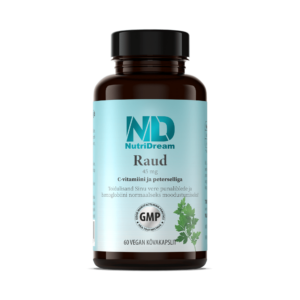
Dead Sea salts are exceptional for skin health and muscle relaxation, but transdermal absorption cannot always correct a systemic mineral deficiency. Iron, for instance, cannot be absorbed through the skin, yet it is vital for hemoglobin formation and oxygen transport. Iron deficiency—marked by pallor, dizziness, and chronic fatigue—cannot be solved by salt baths alone.
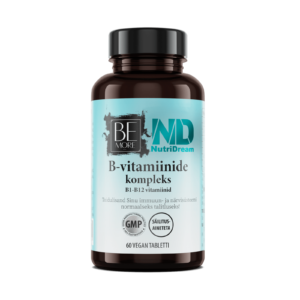
Those suffering from persistent exhaustion should monitor their iron levels and consider highly absorbable supplements, such as iron bisglycinate paired with Vitamin C. Similarly, the body requires B-complex vitamins to maintain the nervous system and metabolic health. A holistic approach—combining the external power of Dead Sea salts with targeted internal nutrition—ensures peak resilience and well-being.

Using Dead Sea salts is a time-tested, scientifically backed method for supporting your health naturally. Their unique, magnesium-rich profile sets them apart from all other salts, providing proven relief for inflammatory skin conditions and helping the body recover from the stressors of modern life. Whether you are looking to hydrate your skin, manage psoriasis, or simply unwind, Dead Sea minerals offer a powerful solution for nourishment inside and out.
Sources:
- A comparison of the effect of certain inorganic salts on suppression acute skin irritation by human biometric assay: A randomized, double-blind clinical trial | 2016-11-02
- A Dead Sea Water-Enriched Body Cream Improves Skin Severity Scores in Children with Atopic Dermatitis | 2011-09-20
- Mixing of Dead Sea and Red Sea waters and changes in their physical properties | 2020-11-01
- Indoor balneophototherapy for chronic plaque psoriasis: Abridged Cochrane Review | 2020-11-25