

Blog
Omega-3 for Athletes: Enhancing Recovery and Managing Inflammation


Have you ever found that despite getting plenty of rest, muscle soreness lingers for days and your next workout feels sluggish? An active lifestyle places significant physiological stress on the body. Under these conditions, omega-3 fatty acids can be a game-changer—accelerating recovery, preventing chronic inflammation, and supporting long-term heart health.
Why Omega-3s Are Essential for Peak Performance
Athletic performance isn’t just about the hours spent in the gym or the intensity of a session; it is fundamentally shaped by how well the body recovers from that load. Omega-3 fatty acids—specifically eicosapentaenoic acid (EPA) and docosahexaenoic acid (DHA)—are polyunsaturated fats that the human body cannot produce on its own in sufficient quantities. As essential components of cell membranes, they dictate cellular flexibility, signal transduction, and the body’s systemic inflammatory response.
Unlike supplements designed for immediate energy, omega-3s provide cumulative, long-term benefits. They integrate into the phospholipid layers of muscle cells, strengthening membranes and protecting them from the oxidative stress that naturally occurs during intense exertion. For those with an active lifestyle, this is vital: chronic inflammation can hinder muscle protein synthesis, trigger persistent fatigue, and increase injury risk. This is why many athletes prioritize a comprehensive selection of supplements for athletes to meet the heightened demands of training.
Furthermore, these fatty acids are precursors to eicosanoids—hormone-like substances that regulate inflammation. A diet too high in omega-6 and too low in omega-3 shifts the body into a pro-inflammatory state. For athletes subjected to repetitive, heavy training loads, omega-3 supplementation helps restore this balance, ensuring the body doesn’t fall into an “inflammatory trap” where recovery becomes stunted.
Managing Inflammation and Reducing Exercise-Induced Muscle Damage
Every high-intensity workout creates micro-trauma in muscle fibers. While this is necessary for adaptation and growth, it requires a carefully controlled inflammatory response. If inflammation becomes excessive or prolonged, cellular regeneration is delayed. A 2024 systematic review demonstrated that omega-3 supplementation significantly lowered post-exercise levels of creatine kinase (CK) and lactate dehydrogenase (LDH), two primary biomarkers of muscle damage.
Managing inflammation is a delicate balancing act. Completely suppressing the inflammatory response (for instance, through heavy use of NSAIDs) can actually block muscle adaptation. However, omega-3s help modulate the cytokine response without neutralizing the body’s natural ability to adapt. Research indicates that 21 days of omega-3 intake altered the post-exercise cytokine response in active men, reducing pro-inflammatory markers like IL-1β and IL-6 while boosting anti-inflammatory factors.
This regulation helps maintain homeostasis even under grueling schedules. For endurance athletes, whose long-distance efforts can exhaust the immune system, the benefits are even more pronounced. Studies on long-distance runners showed that taking 3g of omega-3 daily for three weeks significantly reduced inflammatory mediators after intense downhill running, helping to prevent systemic burnout.
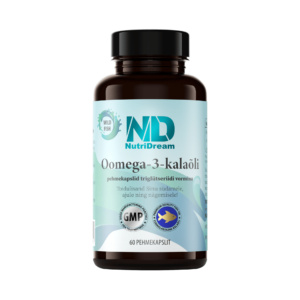
Omega-3 fish oil softgels in the form of triglycerides
Original price was: € 23,83.€ 19,06Current price is: € 19,06.Relieving Delayed Onset Muscle Soreness (DOMS)
Delayed Onset Muscle Soreness (DOMS) is a familiar challenge for any athlete, typically peaking 24 to 72 hours after strenuous activity. It can hinder range of motion, reduce the quality of subsequent workouts, and dampen motivation. Omega-3 fatty acids alleviate muscle stiffness and sensitivity by supporting the body’s internal repair mechanisms.
By improving blood flow and cell membrane permeability, omega-3s facilitate the delivery of nutrients to damaged tissues and the removal of metabolic waste products. Scientific literature confirms that consistent use of omega-3 can reduce DOMS symptoms and exercise-induced muscle damage. This allows athletes to return to high-quality training sooner, without being sidelined by pain.
While omega-3 provides a cumulative benefit rather than an instant “buzz,” its value lies in consistency. The ability to train more frequently with a lower risk of injury is the true foundation of progress. This pairs well with other staples like creatine; while creatine monohydrate acts as a “fast charger” for muscle energy, omega-3 provides the structural support and anti-inflammatory environment needed for that energy to be used effectively.

Creatine monohydrate, unflavored 300g
Original price was: € 14,10.€ 11,98Current price is: € 11,98.Protecting Joints and Connective Tissue
Whether it’s the impact of running or the heavy load of weightlifting, an active lifestyle puts immense pressure on the joints. Over time, cartilage and ligaments can experience micro-inflammation, leading to chronic discomfort. Omega-3 fatty acids are well-regarded for their ability to maintain joint mobility by inhibiting the enzymes that break down cartilage.
For athletes, omega-3s should be a core part of a strategy to support joint health. They help maintain the quality of synovial fluid and reduce the morning stiffness that often signals overtraining. Today, the Omega-3 Index is used as a biomarker for injury prevention and cardiovascular health in professional sports, where high levels are linked to better tissue resilience and faster trauma recovery.
Joint Formula
Original price was: € 19,24.€ 15,39Current price is: € 15,39.Cardiovascular Health and Oxygen Delivery
The heart is an athlete’s most vital muscle. Omega-3 fatty acids help regulate heart rate and improve the elasticity of blood vessels. For an athlete, this means more efficient blood flow and better oxygen transport to working muscles. Because EPA and DHA reduce blood viscosity, the heart doesn’t have to work quite as hard to pump blood during intense efforts.
This is particularly critical for aerobic endurance. High-quality omega-3 supplementation helps keep the lipid profile balanced and supports cardiac function during periods of high physiological demand. Investing in supplements that support heart health is a long-term strategy for athletic longevity.
How to Select a High-Quality Omega-3 Supplement
With so many products on the market, it is important to choose one based on chemical form, purity, and concentration.
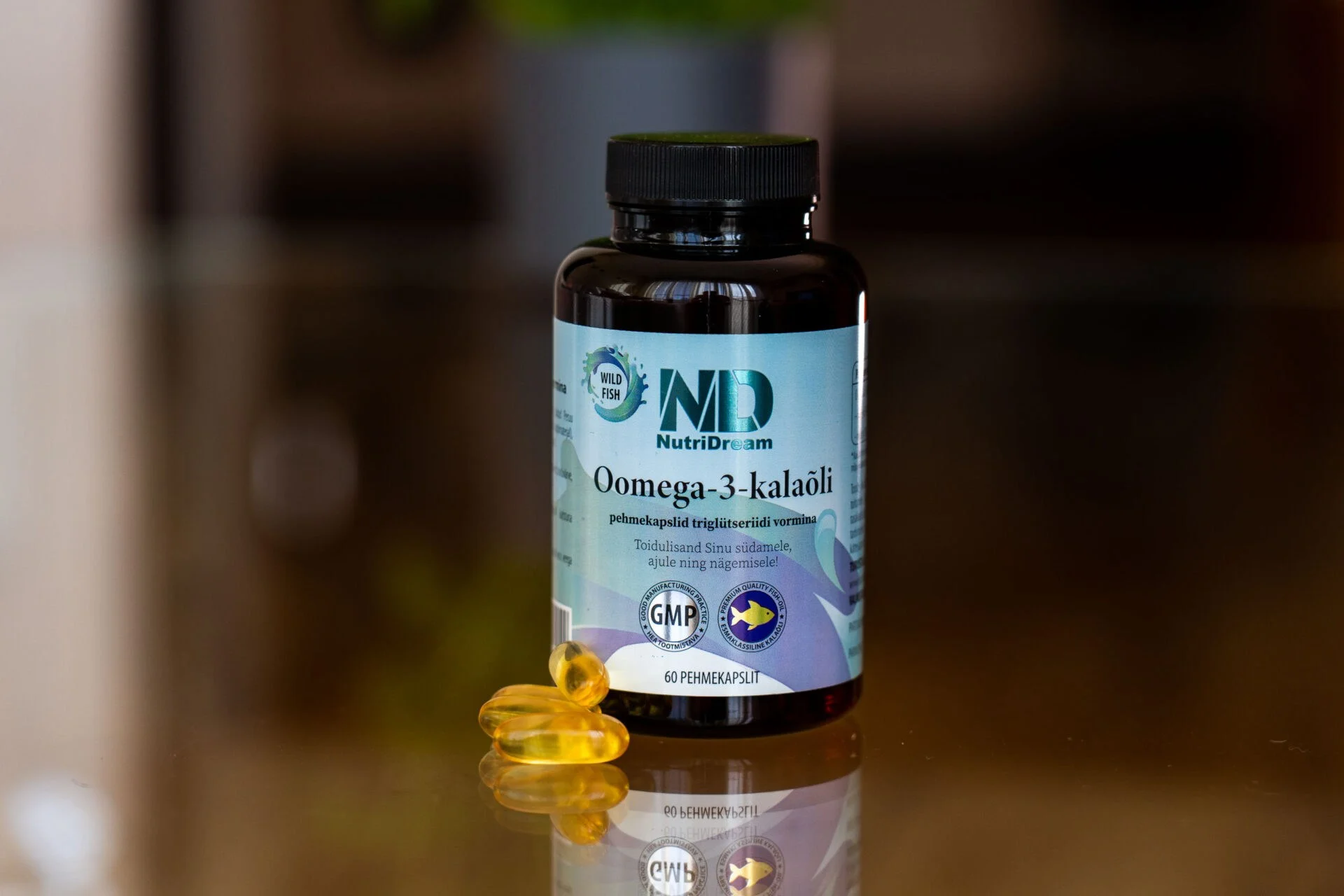
- Triglyceride (TG) vs. Ethyl Ester (EE) Form: Clinical evidence shows that the bioavailability of the triglyceride form is significantly higher than that of ethyl esters. Re-esterified triglycerides are absorbed more efficiently, raising blood omega-3 levels faster—a crucial factor for athletes on a tight schedule.
- EPA and DHA Concentration: Don’t just look at the total “fish oil” content. Check the actual milligrams of EPA and DHA. A premium supplement will offer high concentrations of these active ingredients, such as a capsule providing 700 mg of total omega-3s with high specific doses of EPA and DHA.
- Stability and Oxidation: The oxidative stability of capsules is generally superior to liquid oils, as the capsule protects the sensitive oil from oxygen exposure. Rancid oil is counterproductive, as it introduces oxidative stress into the body.
NutriDream’s Omega-3 fish oil softgels use the triglyceride form to ensure maximum absorption. Manufactured to the highest standards, they are a reliable choice for both fitness enthusiasts and professional competitors.
Synergistic Support: Omega-3, Magnesium, and Iron
Omega-3s work best when the body’s mineral and vitamin levels are optimized. For athletes, magnesium and iron are the perfect partners for fatty acid supplementation.
Magnesium is involved in over 300 biochemical reactions, including muscle relaxation and nervous system regulation. While magnesium prevents cramps and improves sleep quality, omega-3 manages the underlying inflammation, allowing the body to enter a deep state of recovery.
Magnesium and Vitamin B6
Original price was: € 15,08.€ 12,06Current price is: € 12,06.Similarly, iron is indispensable, particularly for endurance sports. Iron is required for hemoglobin formation and oxygen transport, which drives the cellular repair process. Without adequate iron, even the best omega-3 regimen cannot fully restore a fatigued athlete, as a lack of oxygen will always bottleneck tissue regeneration.

Iron (45 mg) with Vitamin C and Parsley
Original price was: € 19,17.€ 11,50Current price is: € 11,50.The Bottom Line on Athletic Recovery
Omega-3 fatty acids are among the most versatile tools available to the modern athlete. By managing inflammation, reducing muscle damage, and alleviating DOMS, they enable the consistency required for long-term progress. By choosing a triglyceride-form supplement with high EPA/DHA concentrations, you ensure your body has the structural support it needs to thrive.
Optimize your recovery by combining a balanced diet and proper rest with high-quality supplementation. It is an investment that manifests as better performance, fewer injuries, and a healthier heart.
- “Omega-3 Fatty Acid Supplementation on Post-Exercise Inflammation, Muscle Damage, Oxidative Response, and Sports Performance in Physically Healthy Adults – A Systematic Review of Randomized Controlled Trials”. Nutrients. (2024)
- “OMEGA-3 FATTY ACIDS: CAPSULES OR OIL? COMPARISON OF STABILITY, BIOAVAILABILITY AND EFFECTIVENESS OF EPA AND DHA SUPPLEMENTATION”. International Journal of Information Technology and Social Sciences. (2026)
- “Effect of 21-Day Omega-3 Polyunsaturated Fatty Acid Supplementation on Exercise-Induced Secretory Factors and Inflammation Status in Young Men: A Randomized Double-Blind Trial”. Nutrients. (2026)
- “The Effects of Omega-3 Fatty Acid Supplementation on the Lipid Profile and Cardiovascular Markers Following Downhill Running in Long-Distance Runners”. Journal of Human Kinetics. (2023)
- “Omega-3 Index as a Sport Biomarker: Implications for Cardiovascular Health, Injury Prevention, and Athletic Performance”. Sports. (2024)