

Blog
Dietary fiber as an invisible ally how the gut influences body weight


Dietary fiber is not just an aid to digestion but one of the most important links between the human body and the microscopic world living in the gut. What and how much we eat directly shapes the gut microbiota, and through this microbiota metabolism, inflammation levels, and appetite regulation are influenced. When the gut bacterial community is diverse and balanced, it supports the body’s natural mechanisms that help keep body weight under control. A fiber rich diet is one of the most effective ways to maintain this balance.
The role of the gut microbiota in metabolism
The gut microbiota consists of trillions of microorganisms, mainly bacteria, that live primarily in the large intestine. Today the microbiota is considered a functional organ because it actively participates in the breakdown of nutrients, the production of bioactive compounds, and the regulation of immune and metabolic processes. When the balance of the microbiota is disturbed, it can affect intestinal permeability, increase inflammation, and promote the development of metabolic disorders. Several studies have shown that the composition of the microbiota differs between normal weight and overweight individuals, indicating its important role in body weight regulation.
How dietary fiber supports the microbiota?
Dietary fibers are carbohydrates that human digestive enzymes cannot break down in the small intestine. As a result, they reach the large intestine largely unchanged, where some of them become food for resident bacteria. Fermentable fibers such as inulin, pectin, resistant starch, and certain beta glucans are particularly valuable for the microbiota. Their intake promotes the growth and diversity of beneficial bacterial groups.
In a randomized controlled study published in 2025, it was observed that just four weeks of a fiber enriched diet improved digestion related wellbeing and increased the abundance of several beneficial bacteria, including Bifidobacterium and Anaerostipes. These changes were also associated with an increase in bacterial metabolic products that have a direct effect on host metabolism 1.
Short chain fatty acids as key factors
When gut bacteria ferment dietary fiber, short chain fatty acids are produced, mainly acetate, propionate, and butyrate. These compounds are not merely byproducts but act as important signaling molecules. Butyrate is the primary energy source for colon cells and helps maintain the integrity of the intestinal lining. At the same time, all three fatty acids influence immune responses, inflammation levels, and metabolic signaling pathways.
The production of short chain fatty acids is associated with better gut barrier function, lower systemic inflammation, and more stable glucose metabolism. These mechanisms are also important for body weight regulation, as chronic inflammation and blood sugar fluctuations can promote fat accumulation.
The link between dietary fiber and weight loss
The effect of dietary fiber on body weight is not based on a single mechanism but on the interaction of several processes.
First, fiber increases food volume and reduces its energy density. This means that at the same caloric intake it is possible to eat a larger amount of food, which supports satiety and helps reduce the risk of overeating.
Second, fermentation products of fiber influence gut hormone activity. Short chain fatty acids can stimulate the release of hormones such as GLP 1 and PYY, which are involved in appetite regulation and signal satiety to the brain. This helps naturally reduce energy intake.
Third, fiber supports better glucose and insulin tolerance. More stable blood sugar levels mean fewer cravings and more efficient energy use, which is very important in the context of weight loss.
Fourth, a fiber rich diet is associated with lower levels of inflammation. Since excess body weight is often accompanied by chronic low grade inflammation, controlling inflammatory processes contributes to the normalization of metabolism.
What do scientific studies show?
In a randomized study published in 2023, the effects of different fiber supplements on body weight under conditions of an energy deficit were examined. The results showed that adding fiber accelerated reductions in body weight and body mass index compared to placebo. A combination of fibers containing glucomannan, inulin, psyllium, and apple fiber proved to be particularly effective 2.
It has also been found that the effect of fiber on body weight may depend on the individual’s initial microbiota composition. The same fiber supplement can produce different results in different people, highlighting the importance of a personalized approach 3.
How much fiber is enough?
Most international recommendations suggest that an adult’s daily fiber intake should be between 25 and 35 grams. In many countries, actual intake remains significantly lower. Studies show that higher fiber intake is associated with better metabolic health and a lower risk of chronic diseases 4.
How to increase fiber intake in the menu so the gut benefits?
The best results come from fiber diversity rather than excessive intake of a single source. Fiber intake should be increased gradually to give the microbiota time to adapt. A daily menu should include legumes, whole grains, vegetables, berries, nuts, and seeds. Adequate fluid intake is also important, especially when consuming viscous fibers.
With fiber, the goal is not only the number of grams but the functional balance of the microbiota, bacterial diversity, and the beneficial metabolites they produce.
NutriDream products aimed at increasing fiber intake
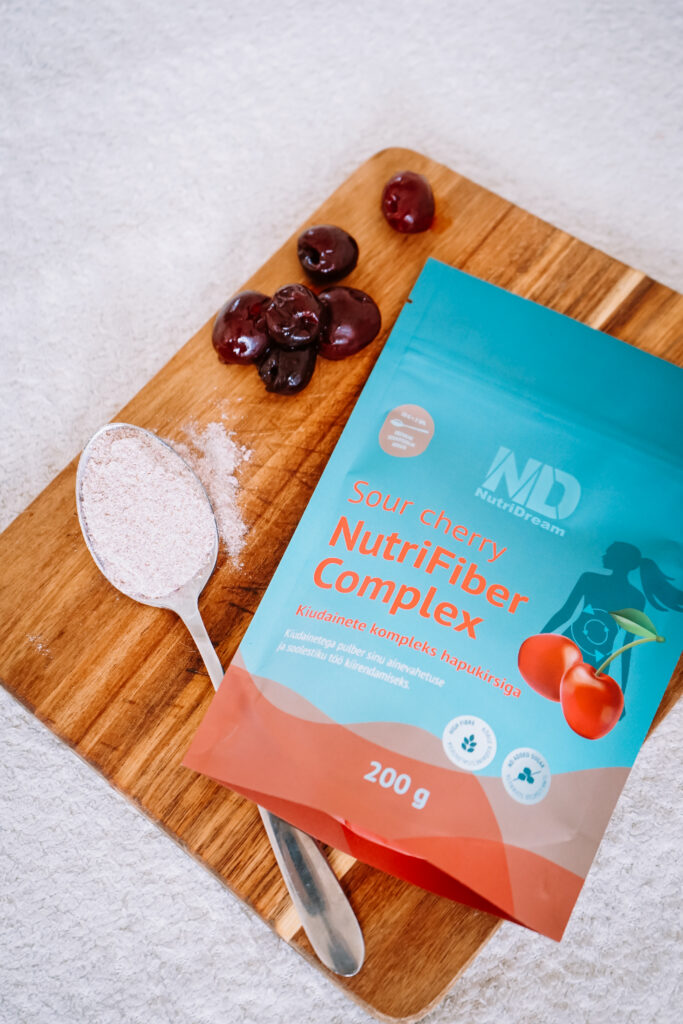
When supporting gut microbiota and body weight, both the amount and diversity of fiber are important. NutriFiber Complex is designed based on this principle, combining different plant based fibers that complement each other through their mechanisms of action. The product contains chicory root inulin, a well known prebiotic fiber that supports the growth of beneficial gut bacteria, flaxseed fiber, which contributes to intestinal transit and overall fiber intake, and psyllium fiber, which forms a gel when mixed with water and supports satiety and digestive regularity. The formulation is complemented by freeze dried pineapple powder, which provides naturally derived fiber and supports ease of use. This diverse fiber combination is well suited for supporting the microbiota and maintaining digestive balance with consistent use.
NutriSlim, whose main component is the water swelling soluble fiber glucomannan, fits into this context as a dietary supplement that may help increase satiety as part of a balanced diet.
Together with consciously chosen nutrition and lifestyle habits, such fiber based solutions can support the body’s natural ability to keep body weight under control.
Used sources:
1 https://pubmed.ncbi.nlm.nih.gov/41011400/
2 https://pubmed.ncbi.nlm.nih.gov/37297364/